
Collagen for Dogs: Benefits, Types, Safety & How to Choose
Last updated: October 2026 · Reading time: 10 minutes
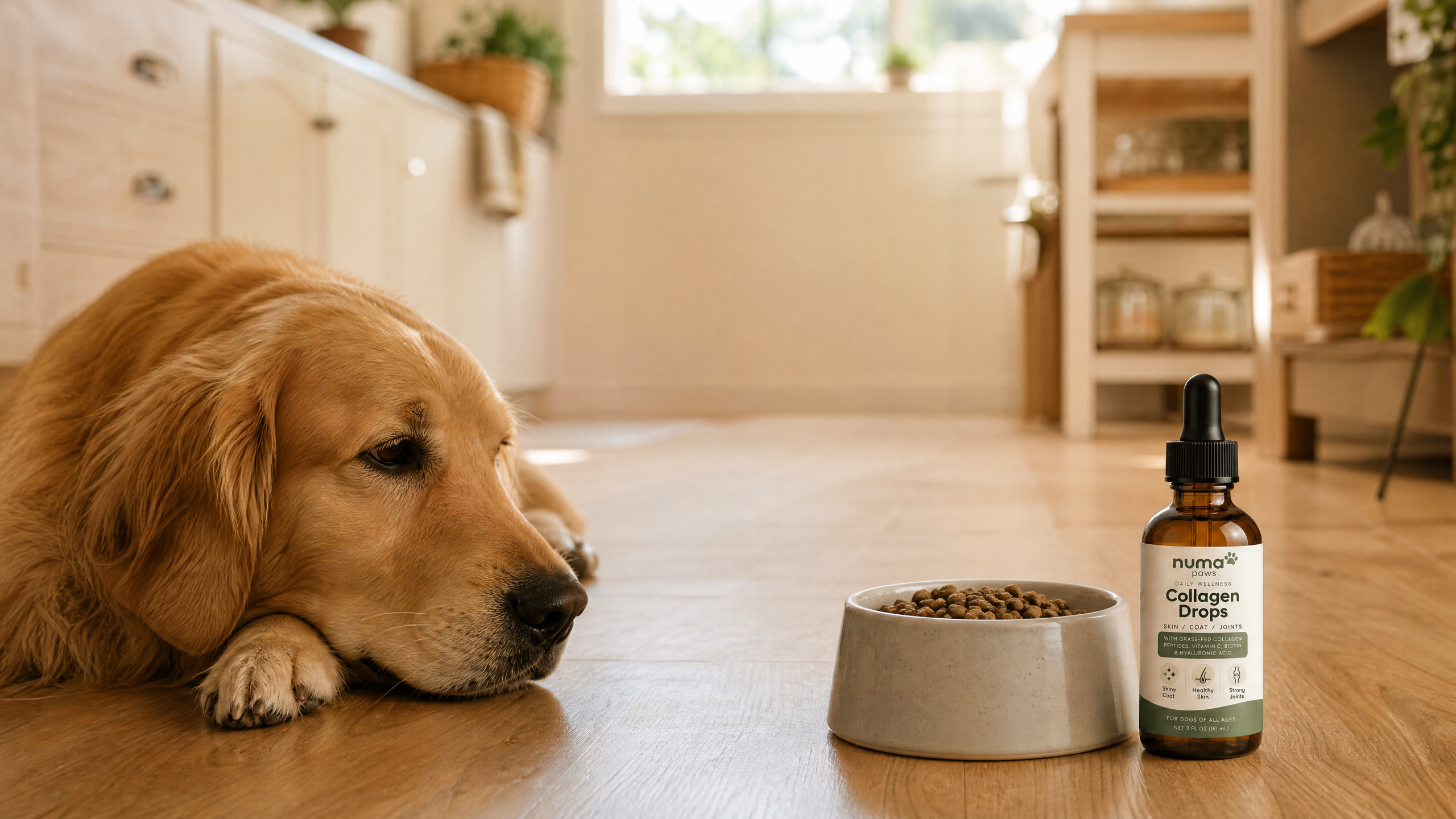
If you've started looking into supplements for your dog, you've probably seen the word collagen everywhere: in chews, powders, bone broths and liquid drops. It's one of the fastest-growing categories in dog wellness, and for good reason. Collagen is one of the main building blocks of your dog's skin, coat, cartilage and connective tissue.
But what does collagen actually do for dogs? Does the research back it up? Which type should you choose, and is it safe? This guide answers all of it in plain English, with an honest look at what we know and what we don't.
Quick answer: Collagen is a structural protein that makes up a large part of your dog's skin, tendons, ligaments and cartilage. Collagen supplements are generally well tolerated and are commonly used to support skin, coat and joint wellness, especially as dogs get older. Research in dogs is still limited and mixed, so think of collagen as one part of a daily care routine, not a cure. Always talk to your vet about any health concern.
What Is Collagen?
Collagen is the most abundant protein in the body of mammals, dogs included. It works like scaffolding: long, strong fibers that give tissues their structure, strength and flexibility.
You'll find collagen in:
- Skin, where it gives structure and elasticity
- Cartilage, the smooth tissue that cushions joints
- Tendons and ligaments, which connect muscles and bones
- Bones, alongside minerals like calcium
- Blood vessels, teeth and the gut lining
Your dog's body makes collagen on its own from amino acids (mainly glycine, proline and hydroxyproline) found in protein-rich food. Collagen production depends on good overall nutrition, and as in humans, the body's collagen turnover can change with age.
The main types of collagen
Scientists have identified more than 25 types of collagen, but three matter most for dog owners:
| Type | Where it's found | Commonly associated with |
|---|---|---|
| Type I | Skin, tendons, bones | Skin and coat, connective tissue |
| Type II | Cartilage | Joints |
| Type III | Skin, blood vessels | Skin, often found alongside Type I |
Bovine (beef) collagen, such as grass-fed collagen peptides, is naturally rich in Types I and III.
Why Do People Give Their Dogs Collagen?
Most owners don't start looking at collagen because of one big event. It's usually the little things they notice first:
- A coat that looks duller or feels drier than it used to
- More fur on the couch, the car and every dark piece of clothing
- Dry or flaky skin, especially in winter
- A slower start in the morning, or a second of hesitation before jumping on the couch or into the car
- A general wish to support an older dog with a simple daily routine
Because collagen is so central to skin, coat and connective tissue, adding it to the diet is a popular way to support those areas from the inside.
Important: Some of these signs, like sudden itching, limping, hair loss in patches or pain, can point to a medical issue that needs a vet. A supplement is never a substitute for a proper diagnosis.
Potential Benefits of Collagen for Dogs
1. Skin health
Collagen is a major structural component of the skin. Many owners add collagen to their dog's routine to help maintain healthy-looking skin. Pairing it with nutrients like vitamin C (involved in the body's own collagen production) and hyaluronic acid (a moisture-binding molecule naturally found in skin) is a common formulation approach.
2. Coat shine and softness
A healthy coat grows from healthy skin. While collagen isn't the main protein of hair itself (that's keratin), supporting the skin the coat grows from is one reason collagen is popular in skin-and-coat routines. Biotin, a B vitamin, is often included for coat and nails.
3. Joint and connective tissue support
Cartilage, tendons and ligaments are rich in collagen. This is where most canine research has focused, particularly on dogs with osteoarthritis. The results so far are promising in some studies and neutral in others (we break this down in our article Is Collagen Good for Dogs' Joints? What the Research Says).
4. Support for senior dogs
As dogs get older, owners often want to be more proactive. Collagen fits naturally into a senior wellness routine alongside regular vet check-ups, a healthy weight, gentle exercise and good nutrition.
5. Nails, gut lining and more
You'll see collagen associated with nails, teeth and gut health online. These uses are based mostly on collagen's role in the body rather than on dog-specific studies, so treat them as possibilities rather than proven benefits.
What Does the Research Say?
Here's the honest picture. Collagen research in dogs is growing, but it's still a young field.
- Undenatured type II collagen (UC-II): In a 2019 randomized study of 60 dogs with osteoarthritis published in Veterinary Sciences, dogs receiving UC-II for 30 days showed mobility improvements comparable to dogs receiving robenacoxib, a veterinary anti-inflammatory drug.
- Collagen hydrolysate (collagen peptides): A 2010 placebo-controlled trial reported improvements in clinical signs in dogs with osteoarthritis given gelatin hydrolysate. However, more recent PhD research at Utrecht University found that, while collagen hydrolysate is absorbed quickly in dogs and showed anti-inflammatory signals in the lab, a 12-week clinical trial did not show a significant difference compared with placebo.
What this means for you: The research is encouraging but not conclusive, and most of it focuses on dogs with diagnosed joint disease. For healthy dogs, collagen is best seen as a nutritional addition that supports normal skin, coat and connective tissue, not as a treatment. Anyone who promises that collagen will "cure arthritis" or "stop shedding" is overselling it.
Types of Collagen Supplements for Dogs
Hydrolyzed collagen (collagen peptides)
Collagen broken down into small peptides that dissolve easily and mix into food. This is the most common form in powders and liquid drops. It provides the amino acids your dog's body uses as building blocks.
Undenatured type II collagen (UC-II)
A form of collagen that keeps its natural structure and is given in very small doses. It's thought to work through a different mechanism, interacting with the immune system in the gut. It's mainly used in joint-focused products.
Gelatin and bone broth
Gelatin is partially broken-down collagen, and bone broth contains varying amounts of both. These are natural sources, but the collagen content is hard to measure and broth recipes for humans often contain onion or garlic, which are toxic to dogs. If you use bone broth, choose one made specifically for dogs.
Chews, powders and liquid drops
The format matters more than people think. The best collagen for your dog is the one you'll actually give every day.
- Chews: easy, but often contain added calories, binders and flavorings, and picky dogs may refuse them.
- Powders: flexible dosing, but can be messy and some dogs dislike the texture.
- Liquid drops: mix straight into food, easy to adjust by dog size with a graduated dropper. Learn more in our guide to Liquid Collagen for Dogs.
A note on "collagen oil for dogs": you may see this phrase online. Most liquid collagen products for dogs are water-based drops, not oils. If you're looking for omega-3 fish oil, that's a different supplement with different uses.
Is Collagen Safe for Dogs?
Collagen is generally considered safe and well tolerated by dogs when given as directed. A few practical tips:
- Start gradually. Introduce any new supplement slowly to avoid an upset stomach.
- Watch for food sensitivities. If your dog is sensitive to beef, check the collagen source (bovine, marine, chicken).
- Never give human collagen products without checking the label. Some contain xylitol, a sweetener that is extremely toxic to dogs, or flavorings that aren't dog-friendly.
- Talk to your vet first if your dog is pregnant, has kidney disease, is on a prescription diet or takes medication.
- Follow the label dose for your dog's size. More is not better.
How to Choose the Best Collagen for Your Dog
Use this checklist when comparing products:
- Made for dogs. Formulated and dosed for dogs, not repackaged human products.
- Clear collagen source. For example, grass-fed bovine collagen peptides.
- Transparent ingredient list. You should know exactly what's in the bottle.
- Sensible supporting ingredients. Vitamin C, biotin and hyaluronic acid are common, logical additions for skin and coat.
- No xylitol, no unnecessary fillers or artificial sweeteners.
- Clear dosing by weight. A graduated dropper or scoop makes it easy to stay consistent.
- Honest claims. Be wary of brands promising to cure, reverse aging or "fix" medical conditions.
- A format your dog accepts and that you'll keep using every day.
How to Add Collagen to Your Dog's Routine
Consistency is everything. Collagen isn't something you give once and see overnight. Here's a simple approach:
- Weeks 1–2: Start with the recommended serving on their food, same time each day, so it becomes a habit.
- Month 1: Pay attention to the details: coat appearance, skin, and how they move during the day.
- Months 2–3: Keep going and compare with where you started. Taking a "before" photo of their coat in natural light helps.
Every dog is different, so focus on your own dog rather than on promises.
Numa Paws Daily Collagen Drops
We created Numa Paws Daily Collagen Drops for dog parents who want a simple, honest daily routine for skin, coat and joint wellness. Each 90 mL bottle combines grass-fed collagen peptides, vitamin C, biotin and hyaluronic acid in an easy liquid you add to food with a graduated dropper. No pills to hide, no chews left behind the couch.
It's not a miracle and it's not a replacement for your vet. It's one small thing you can do every day for the dog who's always there for you.
Discover Numa Paws Daily Collagen Drops →
Frequently Asked Questions
Is collagen good for dogs?
Collagen is a natural protein in your dog's skin, coat and connective tissue, and collagen supplements are generally well tolerated. They're commonly used to support skin, coat and joint wellness. Research in dogs is promising but still limited, so collagen should complement, not replace, good nutrition and vet care.
What does collagen do for dogs?
Collagen provides structure to skin, cartilage, tendons, ligaments and bones. As a supplement, it supplies amino acids the body uses as building blocks and is mainly used to support skin, coat and joint wellness.
Can I give my dog human collagen?
Not without checking very carefully. Human products may contain xylitol, which is toxic to dogs, along with flavorings and doses designed for people. A collagen made for dogs is the safer choice.
How long does collagen take to work in dogs?
There's no guaranteed timeline. Most owners give it consistently for at least 8 to 12 weeks before assessing changes in coat and skin. Every dog is different.
Is collagen good for senior dogs?
Many owners add collagen to an older dog's routine because collagen is part of the tissues that change with age. Senior dogs should have regular vet check-ups, and any new stiffness or pain should be examined by a vet.
Is bone broth the same as a collagen supplement?
Not exactly. Bone broth contains some collagen and gelatin, but the amount varies widely. Never give dogs broth made with onion, garlic or heavy salt.
Can puppies take collagen?
Puppies on a complete and balanced puppy food generally get the nutrients they need. Ask your vet before adding any supplement to a puppy's diet.
Sources
- Stabile M. et al. (2019). Evaluation of the Effects of Undenatured Type II Collagen (UC-II) as Compared to Robenacoxib on the Mobility Impairment Induced by Osteoarthritis in Dogs. Veterinary Sciences, 6(3), 72.
- Utrecht University. PhD defence: Collagen hydrolysates for dogs with osteoarthritis.
- Beynen A.C. et al. (2010). Oral administration of gelatin hydrolysate reduces clinical signs of canine osteoarthritis in a double-blind, placebo-controlled trial. American Journal of Animal and Veterinary Sciences, 5(2).
- American Kennel Club. Bone Broth for Dogs.
This article is for informational purposes only and is not veterinary advice. Always consult your veterinarian about your dog's health, especially if you notice pain, limping, sudden itching or hair loss.