
Liquid Collagen for Dogs: Skin & Coat Benefits and How to Use It
Last updated: October 2026 · Reading time: 8 minutes
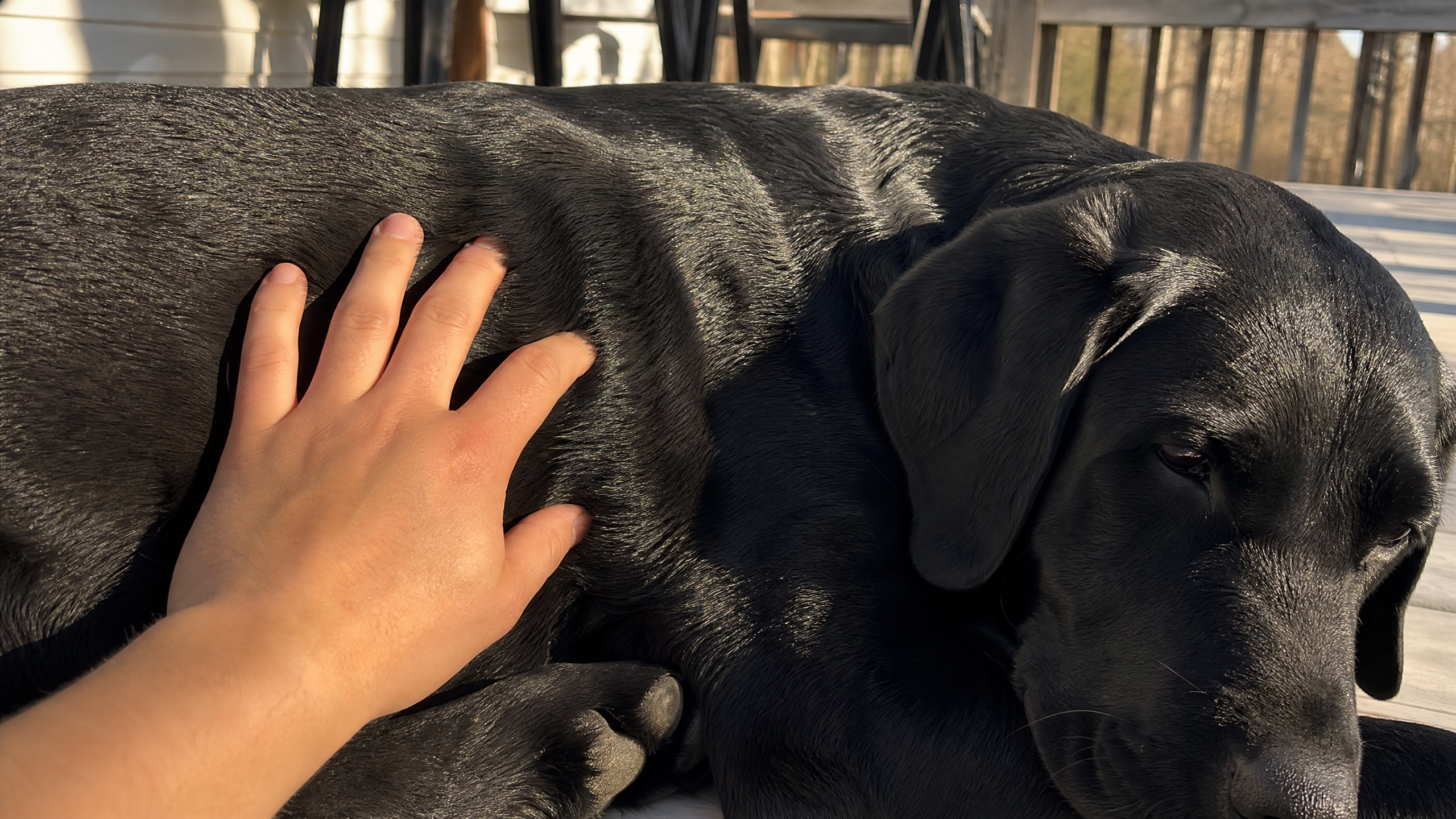
You vacuumed yesterday, and the fur tumbleweeds are already back along the baseboard. When you scratch your dog's back, the coat feels a little drier than it used to. Maybe you've parted the fur and noticed small white flakes.
Skin and coat are the parts of your dog you see and touch every day, so they're often where owners first notice that something has changed. That's one reason liquid collagen for dogs has become so popular: it's an easy, daily way to support skin and coat from the inside.
In this guide, we explain what liquid collagen is, how it relates to skin and coat, which ingredients matter, how much to give and how to make it part of your routine.
Quick answer: Liquid collagen for dogs is collagen (usually hydrolyzed collagen peptides) in an easy-to-dose liquid you add to food. Collagen is a natural part of your dog's skin, and liquid formulas often add vitamin C, biotin and hyaluronic acid to support healthy skin and a shiny-looking coat. It won't stop normal shedding or treat skin conditions, but it's a simple daily habit for skin and coat wellness. Persistent itching, hair loss or red skin should always be checked by a vet.
What Is Liquid Collagen for Dogs?
Liquid collagen is a supplement where collagen, most often hydrolyzed collagen peptides, is dissolved in a liquid base and given with a dropper. Hydrolyzed means the collagen has been broken down into small peptides, which mix easily into food.
Many liquid formulas also include supporting nutrients chosen for skin and coat, such as vitamin C, biotin and hyaluronic acid.
Is it the same as "collagen oil for dogs"?
People often search for "collagen oil for dogs," but most liquid collagen products are drops, not oils. If you want an oil for skin and coat, you're probably thinking of omega-3 fish oil, which is a different supplement with its own benefits. Some owners use both, with their vet's approval.
How Collagen Relates to Your Dog's Skin and Coat
Your dog's skin is their largest organ. The deeper layer of the skin (the dermis) is largely made of collagen fibers, mostly type I and type III collagen, which give it structure and elasticity.
The coat itself is made of keratin, not collagen. But hair grows from follicles in the skin, so a healthy, well-nourished skin is the foundation of a healthy-looking coat. That's the logic behind skin-and-coat supplements: support the skin the coat grows from.
Common skin and coat changes owners notice:
- A dull or brittle coat that's lost its shine
- Dry, flaky skin (often more visible on dark coats)
- More loose fur around the house
- A coat that feels rough instead of soft
When to see a vet first: constant scratching or licking, red or inflamed skin, bald patches, sores, a bad smell, or any sudden change. These can be signs of allergies, parasites, infections or hormonal issues that need a diagnosis. A collagen supplement is not a treatment for any of them.
Key Ingredients to Look For in Liquid Collagen
Collagen peptides
The core ingredient. Grass-fed bovine collagen peptides are naturally rich in types I and III, the main collagen types in skin.
Vitamin C
Vitamin C plays a role in the body's own production of collagen. Interestingly, unlike humans, dogs can make their own vitamin C, so it's included in formulas as a supporting nutrient rather than to fix a deficiency.
Biotin
Biotin is a B vitamin associated with healthy skin, coat and nails. It's one of the most common ingredients in skin-and-coat supplements for dogs.
Hyaluronic acid
Hyaluronic acid is a molecule naturally present in skin and joint fluid, known for binding moisture. It's included to help maintain healthy skin and also supports joint wellness.
What to avoid
- Xylitol or other artificial sweeteners (xylitol is extremely toxic to dogs)
- Human collagen products not formulated for dogs
- Long lists of unexplained fillers or flavorings
- Brands that promise to "stop shedding," "cure itching" or "fix allergies"
Liquid vs. Powder vs. Chews: Which Collagen Format Is Best?
| Format | Pros | Cons |
|---|---|---|
| Liquid drops | Mixes into any meal, easy to adjust by dog size, good for picky or older dogs | Needs a dropper; check storage instructions |
| Powder | Flexible dosing, often economical | Messy, can clump, some dogs dislike the texture |
| Chews | Feels like a treat | Extra calories and binders, fixed dose, picky dogs may refuse |
The best format is the one your dog accepts and you'll stick with every day. For many households, liquid drops are the simplest: no pill pockets, no chews hidden behind the couch, no powder on the kitchen floor.
How Much Liquid Collagen Should I Give My Dog?
The right amount depends on the product's concentration and your dog's weight, so always follow the label of the product you use. Most liquid collagen products give servings by size category, for example:
- Small dogs (under 25 lbs)
- Medium dogs (25–50 lbs)
- Large dogs (50+ lbs)
A graduated dropper makes it easy to give the same amount every day. When starting, some owners begin with a smaller amount for the first few days to let their dog's stomach adjust.
How to Add Liquid Collagen to Your Dog's Food
- Prepare their usual meal, kibble, wet food or fresh food.
- Fill the dropper to the serving for your dog's size.
- Add it directly onto the food and mix lightly if needed.
- Serve as usual. Same time every day helps make it automatic.
- Close the bottle and store it as the label recommends.
How Long Until You Notice a Difference?
Skin and coat renew over weeks, not days, so be patient and consistent. There's no guaranteed timeline and every dog is different, but a realistic way to follow progress is:
- Weeks 1–2: Build the habit. Same meal, same time.
- Month 1: Notice the details: shine in natural light, softness under your hand, flakes when you part the fur.
- Months 2–3: Compare with where you started. A quick "before" photo of their coat in daylight is the easiest way to see the bigger picture.
Remember that shedding is normal. Double-coated breeds such as huskies, shepherds and retrievers "blow" their coats seasonally no matter what you feed them. Regular brushing, good overall nutrition and appropriate bathing all matter just as much as any supplement.
A Complete Skin and Coat Routine
- Complete, balanced diet with quality protein and healthy fats
- Regular brushing to remove loose fur and spread natural oils
- Gentle, dog-specific shampoo, and not too often, which can dry the skin
- Parasite prevention, since fleas are a top cause of itching
- Fresh water available at all times
- A simple daily supplement for skin and coat, if you choose one
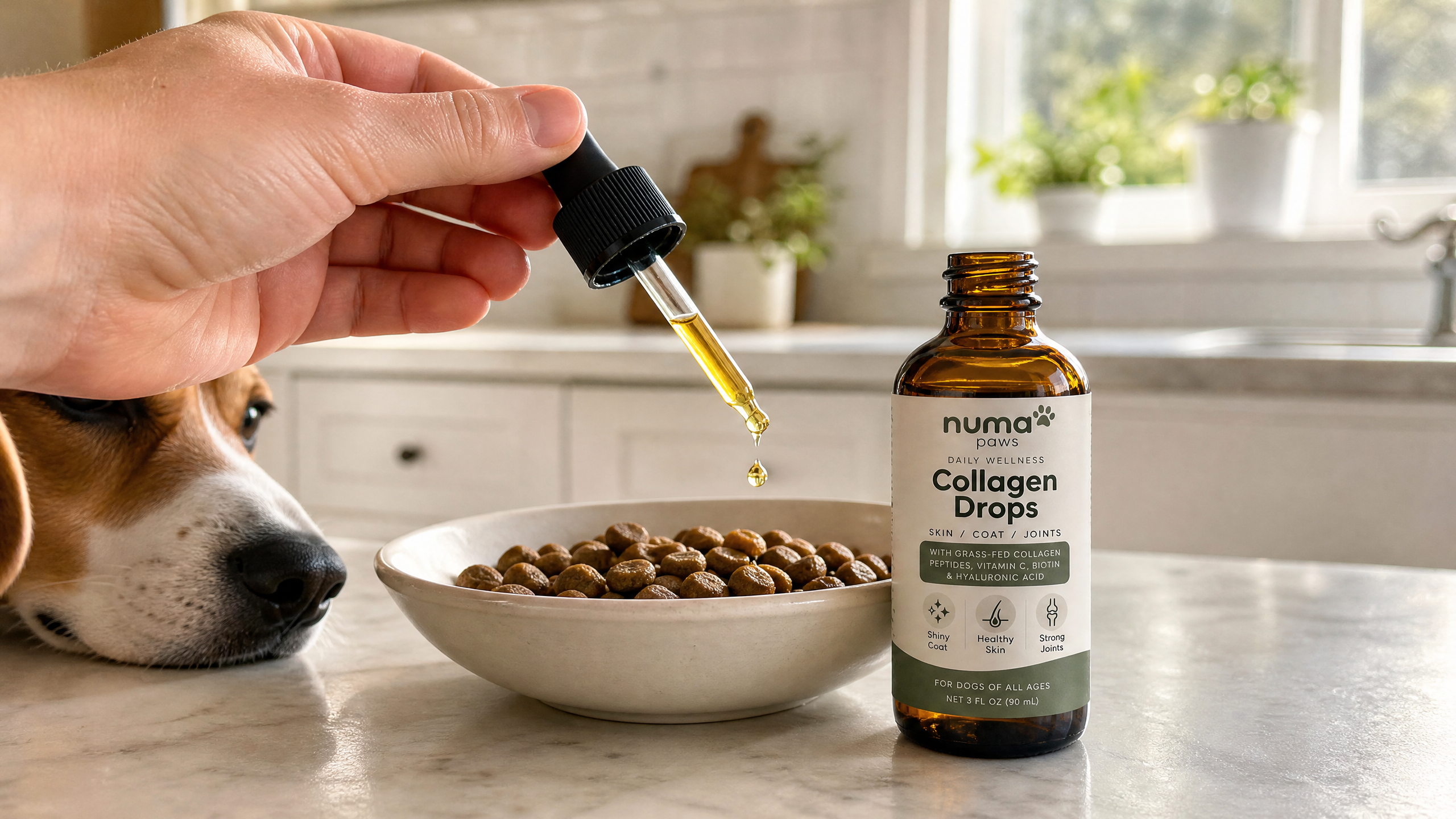
Numa Paws Daily Collagen Drops
Numa Paws Daily Collagen Drops are a liquid collagen made for dogs, with grass-fed collagen peptides, vitamin C, biotin and hyaluronic acid. They're made to promote a shiny-looking coat and help maintain healthy skin, with joint support as part of the same routine.
Each 90 mL bottle comes with a graduated dropper. Add the serving to your dog's food once a day. That's it.
Try Numa Paws Daily Collagen Drops →
Want the bigger picture? Read Collagen for Dogs: The Complete Guide, or learn more about collagen for dogs' joints and senior dogs.
Frequently Asked Questions
Is liquid collagen good for dogs?
Liquid collagen made for dogs is generally well tolerated and is a convenient way to add collagen to their diet. It's commonly used to support skin, coat and joint wellness. It should complement a balanced diet and regular vet care.
Does collagen help with dog shedding?
Shedding is a normal process, and no supplement will stop it, especially in double-coated breeds. Collagen is used to support the health of the skin the coat grows from. If your dog's shedding is sudden, patchy or excessive, see your vet.
Can I put liquid collagen in my dog's water?
It's best to add it to food, so you know your dog actually gets the full serving. Mixing it into a water bowl makes the dose unreliable, especially in multi-dog homes. Follow the product's instructions.
Is there such a thing as collagen oil for dogs?
Most "liquid collagen" for dogs is a water-based drop, not an oil. Omega-3 fish oil is a separate supplement often used for skin and coat.
Can I give liquid collagen with other supplements?
Often, yes, but ask your vet if your dog takes several supplements or any medication, so the full routine makes sense.
Can liquid collagen help an itchy dog?
Itching has many possible causes, including fleas, allergies and infections, which need a vet's diagnosis and treatment. Collagen is not a treatment for itching; it's a daily nutritional support for skin and coat wellness.
Sources
- Utrecht University. PhD defence: Collagen hydrolysates for dogs with osteoarthritis (absorption of collagen hydrolysate in dogs).
- American Kennel Club. Bone Broth for Dogs.
This article is for informational purposes only and is not veterinary advice. If your dog has persistent itching, hair loss or skin irritation, please consult your veterinarian.